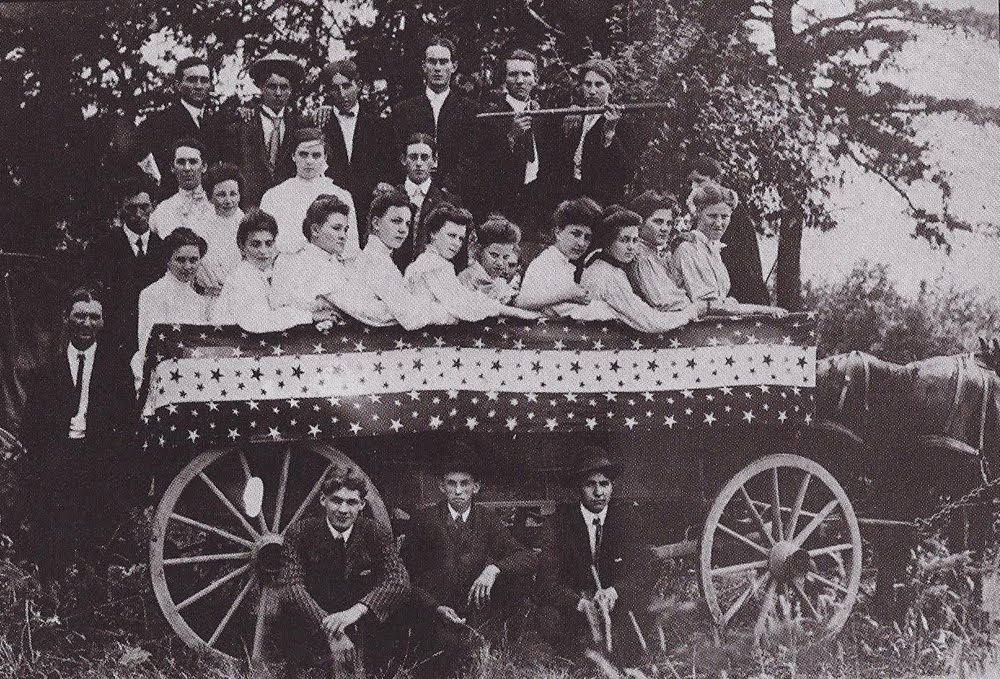
A country girl growing up in Indiana with Kentucky roots and with a touch of a genealogy fanatic. Midwestern values and traditions are my cornerstone.
Friday, May 25, 2012
Another Episode of House Genealogy
The last couple of weeks I’ve had a couple of different requests to find something on some old houses in Brown County. Both from different perspectives and for different reasons, but in both I needed to find an age for a house.
The first one was a typical genealogy query of a sort. A gentleman contacted me to help him find his great grandparent’s ancestral home. He had been researching on the internet and had been looking at Brown County history hoping to find something on his ancestors, David and Emma Phegley. The phone call was a little confusing, something was said about one of the oldest homes in the state of Indiana was in Brown County, and somehow he got that connected to his ancestor. Maybe it was just wishful thinking on his part, but I agreed to look into it.
David Phegley owned land on the eastern edge of Brown County in Section 28, Township 9, Range 4. He at one time owned the whole section in the late 1890s up until his wife’s death in 1910. Making a trip to the County Recorder’s office I was able to find where part of his land went up for Sheriff’s sale. And several sales later the land was split up among several buyers. He died in 1921 and no Probate or Will was to be found. Looking on the county map I was surprised because I knew right where the area was, or at least I knew who owned part of it now. I pulled out my copy of the Brown County Interim Report - Indiana Historic Sites and Structures Inventory. It was prepared by the Historic Landmarks Foundation of Indiana. There was nothing in it for any houses in this area. I found no mention of a house in any of this. This has become a pretty useful book and most Indiana counties have one.
Next, someone advised me to go to the Assessor’s office and get a copy of the current owner’s property card. I was expecting to pay out some kind of fee for the service, but was instead directed to their website. I was able to view and download any property I needed to see. I looked up the current owner’s property card and it gave the age of the house as being built in 1930. I then checked every piece of property in this section and couldn’t find any older house. So it appears that the Phegley house didn’t survive. This was bad news for my client, but the whole process was very educational for me.
My next step for my client if he wished I can deduce what was the last few acres David Phegley lived on before he died. A possible trip to the area with questions for the residents maybe someone will remember seeing an old homesite on their property at sometime in the past. Going back to the house there now built in 1930 has me intrigued. I went by once to talk to the one of my friends. She says her father bought it in 1948-49 so I still would like to find out who built the house in 1930. I’ll be checking the Deed books and Tax Records to see if I can find a mention of a house or some taxable improvements on this land. The reason being I want to add this one to my Historic Homes database I’ve been working on for a couple of months. I stopped by to photograph the house which was a log cabin which has now been mostly covered up with stone. Log cabins here in Brown County are not too rare, but it is one of our biggest requests from house history hunters. Every new resident wants to know how old their log cabin is!
Friday, May 18, 2012
Displaced Families of Brown County
Weed Patch Hill - Parade
Last year I wrote about how my grandparents, Alonzo and Millie Conner, and their families where forced to moved from their ancestral homes for the good of the rest of mankind and progress. Today here in Brown County this has been run over and over again like a broken record. Today, a couple of my genealogy girlfriends and me made a visit to Brown County State Park to view their historical records. One of these friends wrangled a visit for us to see what types of records they carried and if any of it was worth our getting copies for our Archives. We’ve always had a good working relationship with the State Park management from time to time. They’ve given us the Scrapbook of the CCC and info on the history of the State Park.
Reflecting on the history of the State Park brought to mind the instances that has had an effect in our county. After all, besides the State Park, we have the Camp Atterbury Military installation, Yellowood State Forest, Hoosier National Forest, Morgan-Monroe State Forest, and Monroe Reservoir all bounding our county. Brown County is full of beautiful and useful natural resources. Our county has never grown to be a major metropolis. Of all this beautiful wilderness the one natural resource that has never been studied much is the people. This is just now coming about due to the efforts of the Historical and Genealogical Societies.
So what about all these families that have been displaced from their homes? Entire communities have disappeared. Some have made a good effort to keep their history alive by the former residents mostly because their families never moved much farther away. In the southwest corner of the County Lake Monroe reservoir cut off communities such as Elkinsville, Youno, and Cooper. The former Elkinsville residents hold an annual community reunion every year and have written several books on the community and the families. The State Animal Preserve, which is now called Brown County State Park, swallowed up the communities of Kelp and Weed Patch Hill. There is a lot of interested genealogy research done on the families of Kelp, but not much in the way of a published history. Camp Atterbury Military reserve took over land in the northeast part of the county and small communities like Mt. Moriah and Kansas have disappeared. A lot of good history was lost about these communities and their people. There is one published history written many years ago on the coming of the Camp and the process of moving the people. There is some history of the communities and what remains of their passing – mostly their cemeteries.
Browning Mountain - Root cellar remnants
Of the other three government acquisitions there is not much know about the history of the communities and families that were displaced from the areas of Yellowood State Forest, Morgan-Monroe State Forest, and Hoosier National Forest. Not much of the histories of these areas have been published. Most likely it is because they were located in more remote areas of the county with little or no usable farm land. You can bet though that there are stories out there that need to be written or told so these people and their communities won’t be forgotten. All that is left testifies to the fact that there are communities lost to time with names like Scarce-o-Fat Ridge in Yellowood and Browning Mountain in Hoosier National Forest. Sometimes the only evidence left behind are from remote cemeteries miles from civilization that was left after their families moved out.
Last year I wrote about how my grandparents, Alonzo and Millie Conner, and their families where forced to moved from their ancestral homes for the good of the rest of mankind and progress. Today here in Brown County this has been run over and over again like a broken record. Today, a couple of my genealogy girlfriends and me made a visit to Brown County State Park to view their historical records. One of these friends wrangled a visit for us to see what types of records they carried and if any of it was worth our getting copies for our Archives. We’ve always had a good working relationship with the State Park management from time to time. They’ve given us the Scrapbook of the CCC and info on the history of the State Park.
Reflecting on the history of the State Park brought to mind the instances that has had an effect in our county. After all, besides the State Park, we have the Camp Atterbury Military installation, Yellowood State Forest, Hoosier National Forest, Morgan-Monroe State Forest, and Monroe Reservoir all bounding our county. Brown County is full of beautiful and useful natural resources. Our county has never grown to be a major metropolis. Of all this beautiful wilderness the one natural resource that has never been studied much is the people. This is just now coming about due to the efforts of the Historical and Genealogical Societies.
So what about all these families that have been displaced from their homes? Entire communities have disappeared. Some have made a good effort to keep their history alive by the former residents mostly because their families never moved much farther away. In the southwest corner of the County Lake Monroe reservoir cut off communities such as Elkinsville, Youno, and Cooper. The former Elkinsville residents hold an annual community reunion every year and have written several books on the community and the families. The State Animal Preserve, which is now called Brown County State Park, swallowed up the communities of Kelp and Weed Patch Hill. There is a lot of interested genealogy research done on the families of Kelp, but not much in the way of a published history. Camp Atterbury Military reserve took over land in the northeast part of the county and small communities like Mt. Moriah and Kansas have disappeared. A lot of good history was lost about these communities and their people. There is one published history written many years ago on the coming of the Camp and the process of moving the people. There is some history of the communities and what remains of their passing – mostly their cemeteries.
Browning Mountain - Root cellar remnants
Of the other three government acquisitions there is not much know about the history of the communities and families that were displaced from the areas of Yellowood State Forest, Morgan-Monroe State Forest, and Hoosier National Forest. Not much of the histories of these areas have been published. Most likely it is because they were located in more remote areas of the county with little or no usable farm land. You can bet though that there are stories out there that need to be written or told so these people and their communities won’t be forgotten. All that is left testifies to the fact that there are communities lost to time with names like Scarce-o-Fat Ridge in Yellowood and Browning Mountain in Hoosier National Forest. Sometimes the only evidence left behind are from remote cemeteries miles from civilization that was left after their families moved out.
Saturday, April 28, 2012
Circuit Riders in Indiana
Oak Ridge Church - 1941
I recently received a request from a young man that was looking for a special boarding school/mission where his grandmother was sent when she was a child. From looking through our Archives and sending out this question to some of our native Brown Countians I’m afraid we came up with very little to help him find his answer. The only thing I could do was refer him to the Methodist Church Archives at DePauw University in Greencastle, Indiana. A group of us visited there last year to do some research on some our local Methodist churches here in Brown County. We came back from our visit with tons of new information. This reminded me of the history I had learned about the church and how education was brought to Brown County.
At the time of the westward movement in the U. S., many settlements were without schools or churches. Many early pioneers could not read or write. In the year 1817 a group of Philadelphia men organized the Sunday and Adult School Union. In 1824 the name was changed to the American Sunday School Union. Its purpose being to locate and help maintain Sunday Schools in communities where there were none and to provide literature for these schools. A number of missionaries were sent out with Christian literature, lessons, and books for the children. The Union was non-denominational. After the school was established the residents were left to choose their own denomination. Both laymen and clergy were involved in this mission. Churches from Catholic to Methodist were involved with the mission. Many of these traveling missionaries came to be called Circuit Riders. If you can find records of these Circuit Riders then you’ve found a treasure of information. Two of these Circuit Riders played a big role in our county at different times in our history, the Reverend Eli Farmer and Reverend Warren C. Chafin.
In 1840 the Union published story books for children to help them develop good values and morals. Often children in disadvantaged areas of the country first learned to read from these books. With the coming of the American Sunday School Union to Brown County this was the only education these remote areas would see for many years to come. At one point in our county’s history these Sunday Schools were the only schools established in our county. The Methodist church was the biggest supporter of schools in Brown County. If a child wanted to learn to read then they went to Sunday school.
I didn’t realize how important the church was to the local community. The church was the center of the whole community. Everyone gathered there for everything from religious services to social events to schooling. This might be the only time a family would leave their home and farm to meet with their neighbors or learn of news from the outside world. The church was indeed the absolute center of the community.
This has always amazed me especially when reading through these old church records. They contain a world of information. We’ve been compiling church histories for our local genealogical society to be put in print for researchers. This visit to the Methodist Archives was just a beginning. We have plans to go back with so much more information to bring back with us.
I recently received a request from a young man that was looking for a special boarding school/mission where his grandmother was sent when she was a child. From looking through our Archives and sending out this question to some of our native Brown Countians I’m afraid we came up with very little to help him find his answer. The only thing I could do was refer him to the Methodist Church Archives at DePauw University in Greencastle, Indiana. A group of us visited there last year to do some research on some our local Methodist churches here in Brown County. We came back from our visit with tons of new information. This reminded me of the history I had learned about the church and how education was brought to Brown County.
At the time of the westward movement in the U. S., many settlements were without schools or churches. Many early pioneers could not read or write. In the year 1817 a group of Philadelphia men organized the Sunday and Adult School Union. In 1824 the name was changed to the American Sunday School Union. Its purpose being to locate and help maintain Sunday Schools in communities where there were none and to provide literature for these schools. A number of missionaries were sent out with Christian literature, lessons, and books for the children. The Union was non-denominational. After the school was established the residents were left to choose their own denomination. Both laymen and clergy were involved in this mission. Churches from Catholic to Methodist were involved with the mission. Many of these traveling missionaries came to be called Circuit Riders. If you can find records of these Circuit Riders then you’ve found a treasure of information. Two of these Circuit Riders played a big role in our county at different times in our history, the Reverend Eli Farmer and Reverend Warren C. Chafin.
In 1840 the Union published story books for children to help them develop good values and morals. Often children in disadvantaged areas of the country first learned to read from these books. With the coming of the American Sunday School Union to Brown County this was the only education these remote areas would see for many years to come. At one point in our county’s history these Sunday Schools were the only schools established in our county. The Methodist church was the biggest supporter of schools in Brown County. If a child wanted to learn to read then they went to Sunday school.
I didn’t realize how important the church was to the local community. The church was the center of the whole community. Everyone gathered there for everything from religious services to social events to schooling. This might be the only time a family would leave their home and farm to meet with their neighbors or learn of news from the outside world. The church was indeed the absolute center of the community.
This has always amazed me especially when reading through these old church records. They contain a world of information. We’ve been compiling church histories for our local genealogical society to be put in print for researchers. This visit to the Methodist Archives was just a beginning. We have plans to go back with so much more information to bring back with us.
Saturday, April 07, 2012
House History - Mackey Log Cabin
Some of the requests that come into the Archives are to help someone find how old their log cabin is. Many of them have the information right under their noses but just don’t know how to go about finding it. Most of the time if a homeowner still holds their abstract the information is right there. They just need help in deciphering it. There are other methods though that can be used to find the age of a home or at least get an estimated age. The first thing we always check at the Archives are the Tax Records. We start going back from the last known owner. It is best thing to study how the tax records are set up.
In Brown County and probably in many other states tax payers are listed in the Tax Duplicates book. The column headings can be varied having anything that the county might want to tax for that year. I’ve seen taxes charged for buggies, pocket watches, horses, cattle, hogs, wagons, or barns. There are two useful columns though for our purposes that are taxed. The first item we look for is land which will usually have the acreage and the location of the land with a physical description of some sort. The second is a column titled Improvements. If tracked backward you can watch when a change occurs in value in this column. It may not spell out what the improvement was, but you may see quite a jump in value when a house or a barn is built that year. If possible find out what items were taxed that year such as houses but maybe not barns. And as always it is best to corroborate this with personal accounts or county histories when trying to date a house or even an area of the county.
One such case I’m working on now was one where I was asked about a log house that used to be owned by a descendent of the Mackey family. The house is no longer there, but there were stories about the house and the family that this person could recollect. The original owner was Henry Mackey and was a very good carpenter. He was an immigrant from Germany and when he settled in Brown County he laid his hand and hammer to many structures in southern Brown County. He was said to have built one of the first bridges to cross Salt Creek helping to open a vital life line from southern Brown County to the rest of the county. According to family lore it was named the Mackey Bridge.
He also built a very fine log home for that day and time. This description comes from our local newspaper, The Brown County Democrat of May 30, 1990. “At the end of Brand Hollow lane in Van Buren Township was a log house built in the mid 1800s. The house was 27 ft. by 17 ft. The main room on the first floor had corner stairs which led to a full room on the second floor. The interior was paneled throughout with poplar. It was decked with tongue and groove poplar board. The house had two front doors and a huge front porch. The house was part of a self-sustaining farm which also ran a sorghum mill.” Another column written by another reporter in connection to the same house reports a little different story. “The 1830s log cabin from Brand Hollow Road in Van Buren Township has become the elegant, two-story addition to a 1940s log cabin in Hamblen Township. The entire project, disassembling and moving the log home, was done by the Brown County High School’s building trades class.”
So which one is right? Was it built in the mid 1800s or in the 1830s? There could be quite a bit of difference there. It’s time to start checking records. Doing a check on land grants could help. John Henry Macka received his three land grants on September 27, 1854. The earliest land grant of any of his neighbors was in 1849. So the likelihood of this house being built in the 1830s is unlikely. The later estimate of the log house being built in the mid 1800s is the better guess, which would be more in line with when Henry Mackey got his land grant. Unfortunately our tax records are not complete for this period, but the ones we do have it may be helpful to check. The years we do have are 1848, 1849, 1851, 1858, and 1859. The next one jumps to 1864. We may be able to narrow down a closer date from these few tax records still in existence. We can do this by checking the column in the Tax Duplicates book under Improvements. Even with very little information you can get a good estimate of how old a very old home is. There are many more avenues that can be checked also. We just use the same principles as doing genealogical research on a person and apply it as if we are researching that elusive ancestor that we all have been trying to find.
Monday, March 26, 2012
House History Research - Developing Research Parameters
Main Street in Nashville - Abe Martin Restaurant & Genolin Pharmacy
Since I've taken over the helm as Head Archivist I've been doing a lot of thinking on this subject of bringing our Archive up to the present technology. There have been many good archivists over the years that were very diligent in organizing the collections, compiling information, and indexing what they thought needed to be indexed. They have done a lot of good work. Now it is time to lend my hand to it and see what else I can do to make it better. I've spent the first year just familiarizing myself with our collections. I know there is so much more there that I haven't even laid eyes on yet. I came into this job as a genealogist and that has helped me to see the human side of Brown County history. We've got a good start on a Surname file for genealogical research that we can constantly add to. Most of our research requests to date pertains to family genealogy. So this side has been easy for me to get to work on right away, also my volunteers are genealogists.
Now I have come upon a popular subject that doesn't directly relate to genealogy - house history. In a way one can use genealogical research methods. This being a popular subject I need to develop a better system to better organize and search this collection. We started with one drawer in a filing cabinet. The first organizational division is by location and most of the homes that are covered are only located in the county seat, the town of Nashville. There is one other file named Cabins - pretty generic huh? What would be a better way to organize this so the common person can look for their home? So we need to sit down and go over all the perimeters that might be used to locate a house/building. We need to apply these parameters in our filing system and possibly a database.
I went through a learning situation when I was asked to find where an old store used to be located in Nashville. The query was to find a photo of the building and where in town it was located. We had to know the timeframe this particular store would have went by this name - the Genolin Pharmacy. From the two photos that we had on this store you can see stores that are on either side of it. From the above photo: looking west the Abe Martin Restaurant was on the left side of the pharmacy. Both were located on the south side of the street across from the courthouse. The courthouse is one of the oldest buildings in Nashville. That made it a good point of reference.
Abe Martin Restaurant, Genolin Pharmacy, and a Shoe & Harness Repair Shop
Several search parameters that we came across is what we will probably use to develop a database of homes/buildings. From our research we learned that the Genolin Pharmacy later became the Rustic Inn. This later name is what helped us locate the building in Nashville. So we come up with some search terms we may use which are: popular name, other names used, original owner, builder, current address, GPS coordinates, year built. These are just a few that might need to be column headings in our database. Should we develop our database with major divisions with county locations such as townships and cities or should we treat it like a Surname file and organize it by 'Popular name'? The first question we ask of the customer "what part of the county is your house located?" Maybe that should be our first major subdivision. What other search parameters should we use - type of structure, outbuildings if any, location in relation to property lines or roads? Setting up the database and inputting information I'm sure we'll find other items that might be helpful and items that we might not need. First some research on other databases of this type should be our first step.
Since I've taken over the helm as Head Archivist I've been doing a lot of thinking on this subject of bringing our Archive up to the present technology. There have been many good archivists over the years that were very diligent in organizing the collections, compiling information, and indexing what they thought needed to be indexed. They have done a lot of good work. Now it is time to lend my hand to it and see what else I can do to make it better. I've spent the first year just familiarizing myself with our collections. I know there is so much more there that I haven't even laid eyes on yet. I came into this job as a genealogist and that has helped me to see the human side of Brown County history. We've got a good start on a Surname file for genealogical research that we can constantly add to. Most of our research requests to date pertains to family genealogy. So this side has been easy for me to get to work on right away, also my volunteers are genealogists.
Now I have come upon a popular subject that doesn't directly relate to genealogy - house history. In a way one can use genealogical research methods. This being a popular subject I need to develop a better system to better organize and search this collection. We started with one drawer in a filing cabinet. The first organizational division is by location and most of the homes that are covered are only located in the county seat, the town of Nashville. There is one other file named Cabins - pretty generic huh? What would be a better way to organize this so the common person can look for their home? So we need to sit down and go over all the perimeters that might be used to locate a house/building. We need to apply these parameters in our filing system and possibly a database.
I went through a learning situation when I was asked to find where an old store used to be located in Nashville. The query was to find a photo of the building and where in town it was located. We had to know the timeframe this particular store would have went by this name - the Genolin Pharmacy. From the two photos that we had on this store you can see stores that are on either side of it. From the above photo: looking west the Abe Martin Restaurant was on the left side of the pharmacy. Both were located on the south side of the street across from the courthouse. The courthouse is one of the oldest buildings in Nashville. That made it a good point of reference.
Abe Martin Restaurant, Genolin Pharmacy, and a Shoe & Harness Repair Shop
Several search parameters that we came across is what we will probably use to develop a database of homes/buildings. From our research we learned that the Genolin Pharmacy later became the Rustic Inn. This later name is what helped us locate the building in Nashville. So we come up with some search terms we may use which are: popular name, other names used, original owner, builder, current address, GPS coordinates, year built. These are just a few that might need to be column headings in our database. Should we develop our database with major divisions with county locations such as townships and cities or should we treat it like a Surname file and organize it by 'Popular name'? The first question we ask of the customer "what part of the county is your house located?" Maybe that should be our first major subdivision. What other search parameters should we use - type of structure, outbuildings if any, location in relation to property lines or roads? Setting up the database and inputting information I'm sure we'll find other items that might be helpful and items that we might not need. First some research on other databases of this type should be our first step.
Sunday, March 11, 2012
Finding Records in Brown County, Indiana
Brown County Public Library
This is a short description of where in Brown County certain records/documents can be found. Many counties in Indiana will be similar, but it will give you a sense of where to look when in another county. There are three main locations for Brown County's records - Public Library, County offices, Historical Society.
When beginning any genealogical search one is always best advised to start at the Public Library. Many county records can be found there on microfilm or on the book shelves. There are published family histories that other researchers have donated. These could save you a lot of time if you find one of your families in one of these. Then in the genealogical section you will find many indexes in book form for many of the most used county records. These can save you time also, because some county records are not indexed. The local newspaper is here also on microfilm to look up articles/obits. But don't look here first for an obit because most of our obits have been put in book form from 1918 to 1999 which will be in the genealogy section. The marriage records, deaths, births, court records, wills, guardianships, etc. are all indexed or abstracted in books at the library. It is best to start here, find your document in the index, write it down, and then pay a visit to the other two repositories.
The County offices still hold most of the old records from the county's beginnings in 1837. Located in two buildings the Brown County Courthouse and the County building you can can take the next step in your search. The Clerk's office holds the Marriage records, Will books, Court order books, etc. In the courthouse fire of 1873 only a few records were lost from 1873 in the Clerk's office. The Recorder's office holds the miscellaneous books and the deed books, although the courthouse fire of 1873 destroyed all the earlier books prior to 1873. Some of the earlier deeds have been re-recorded though depending on who was willing to come back to the Recorder's office to add their deeds back to their files. For records on early land transactions though you can still find most all of those at the Auditor's office in the Land Transfers books and Tract books which all survived the fire. The Birth and Death Records are located in the Health Dept. Although their collection is spotty especially in the earliest records when they were required to start recording births and deaths in 1882.
The last leg of your trip should include the Historical Society's Archives. That's where I come in. Our Archives contain a lot more detailed information for family researchers. Our collection includes special collections on historical subjects which is anything to do with the history of our county - railroads, festivals, military, etc. We have special collections donated by individuals that may contain some genealogy and some history which pertains to the individual's role in our county history. These may be artists, politicians, business owners. We also house the Circuit court and Probate court packets. These are envelopes with all the loose paperwork that pertains to each case. In these you might find warrants, receipts, copies of filed paperwork, legal documents, etc. If you are interested in visiting our county to do research it is best to contact either the library or the historical society. Either one can give you an idea of what our hours of operation are and our location. See our websites below.
Brown County Public Library
http://www.browncounty.lib.in.us/
Brown County Historical Society
http://www.browncountyhistorycenter.org/
This is a short description of where in Brown County certain records/documents can be found. Many counties in Indiana will be similar, but it will give you a sense of where to look when in another county. There are three main locations for Brown County's records - Public Library, County offices, Historical Society.
When beginning any genealogical search one is always best advised to start at the Public Library. Many county records can be found there on microfilm or on the book shelves. There are published family histories that other researchers have donated. These could save you a lot of time if you find one of your families in one of these. Then in the genealogical section you will find many indexes in book form for many of the most used county records. These can save you time also, because some county records are not indexed. The local newspaper is here also on microfilm to look up articles/obits. But don't look here first for an obit because most of our obits have been put in book form from 1918 to 1999 which will be in the genealogy section. The marriage records, deaths, births, court records, wills, guardianships, etc. are all indexed or abstracted in books at the library. It is best to start here, find your document in the index, write it down, and then pay a visit to the other two repositories.
The County offices still hold most of the old records from the county's beginnings in 1837. Located in two buildings the Brown County Courthouse and the County building you can can take the next step in your search. The Clerk's office holds the Marriage records, Will books, Court order books, etc. In the courthouse fire of 1873 only a few records were lost from 1873 in the Clerk's office. The Recorder's office holds the miscellaneous books and the deed books, although the courthouse fire of 1873 destroyed all the earlier books prior to 1873. Some of the earlier deeds have been re-recorded though depending on who was willing to come back to the Recorder's office to add their deeds back to their files. For records on early land transactions though you can still find most all of those at the Auditor's office in the Land Transfers books and Tract books which all survived the fire. The Birth and Death Records are located in the Health Dept. Although their collection is spotty especially in the earliest records when they were required to start recording births and deaths in 1882.
The last leg of your trip should include the Historical Society's Archives. That's where I come in. Our Archives contain a lot more detailed information for family researchers. Our collection includes special collections on historical subjects which is anything to do with the history of our county - railroads, festivals, military, etc. We have special collections donated by individuals that may contain some genealogy and some history which pertains to the individual's role in our county history. These may be artists, politicians, business owners. We also house the Circuit court and Probate court packets. These are envelopes with all the loose paperwork that pertains to each case. In these you might find warrants, receipts, copies of filed paperwork, legal documents, etc. If you are interested in visiting our county to do research it is best to contact either the library or the historical society. Either one can give you an idea of what our hours of operation are and our location. See our websites below.
Brown County Public Library
http://www.browncounty.lib.in.us/
Brown County Historical Society
http://www.browncountyhistorycenter.org/
Sunday, March 04, 2012
The Death of Young John Cullen - Conclusion
A trip to the courthouse was needed to look at any final documents on the case of State of Indiana vs. George Fleener, Joseph McClung, and Nathan Fritch. The clerk's office was very helpful in helping me find any other information on this case. Unfortunately from the fire of 1873 part of the documents must have been lost. Two different documents was all that was left that pertained to this case.
In the Order Book in the Clerk's office on June 22, 1885 a warrant was issued for the arrest of George Fleener. The warrant was postponed 2 more times. The last one was for July 10, 1886. No other documentation was found after that date. George Fleener must not have showed up or was not found by the authorities so he could be brought before the court. The only other document found was for the November term 1873 where Joseph McClung was appointed an attorney for his part in the case. Nathan Fritch must not have been charged in the death of John Cullen. From the witness testimony he played a very small part in the fight.
One final thing I wanted to get cleared up was an exact date for John Cullen's death. There were no death records required in Indiana until 1882 and there was no burial information that could be found for John Cullen. There were Coroner's reports that did go back to 1866 in Brown County but these were spotty at best. John Cullen was listed in the index but the records could not be found. I've found this before. Usually if you check the court records the Coroner's report turns up in the court case files. One final attempt was made to go back through the doctor's testimony. It being tedious and the details pretty grueling it was worth it in the end.
The fight occurred on April 12, 1873. Using the date calculator on my genealogy program and the doctor's testimony of the events of that week the exact date could be calculated. According to the doctor's testimony, Cullen came to see him on Saturday, which turned out to be the same day of the fight. The doctor said he stayed with him until his death which was the following Thursday. That made John Cullen's death date April 17, 1873. This is probably the only place this young man's date of death was ever documented. No other documentation could be found except maybe if a family bible was kept. As best as could be done these drastic events could be put together. Nothing of George Fleener was ever turned up again.
Sunday, February 26, 2012
The Death of Young John Cullen - Investigation
Brown County Courthouse
The query of this investigation: what happened to George Fleener after he killed Cullen?
The case: The State of Indiana vs. George Fleener, Joseph McClung, and Nathan Fritch.
(Please read the last post of this name if you haven't already to catch up on details.)
In researching any topic thoroughly one must look at every aspect involved. The area that this event, the death of John Cullen, took place in was hilly country. Farms spotted the hills and valleys. Travel might have taken a day to get to the gathering places such as the country store, the church gathering, or the country school, but all in all it was a community. Looking in the 1870 and 1880 census during this time of Cullen's death in 1873 tells a lot. Cullens, Robertsons, Fleeners, Fritchs, and McClungs were relatively close neighbors. The area was situated in Jackson township which is in the northwest corner of the county close to Monroe County. A lot of families went to Monroe County to do business so both counties needed to be checked.
The two main characters in this event were John Cullen and George Fleener. It might be good to check on their family lines. John Cullen was born abt. 1851 in Noble County, Ohio, the son of James Cullen and Rosanna Haeffer. His father born in Ireland and mother born in Pennsylvania. He had brothers and sisters: Peter Wilson, Mary A., Harriet, Samuel, Elizabeth, Hester A., Catherine, Rhoda Dora, Susan M., James H., and Rosea. All of this was taken from census records and family histories.
The accused, George Fleener, was born abt. 1854 and his parents were Abraham Fleener and Sarah Jane Alexander. His siblings were: Nancy Jane, James A., Alexander, William Thomas, Mary Eliz., Sarah Ann Marie, Andrew Jackson, Fleming Valandingham, Catherine, and Martha Ellen.
To begin with we tried to find any other information on George so all of his siblings and his parents were researched. None of the obituaries that we were able to obtain from the brothers or married sisters mentioned George as a brother or his whereabouts. We hit a dead end here. Next we needed to look at family histories so a trip to the library was the next destination.
In the book, "History and Families - Brown County, Indiana" under a family history of the Fleener family one line at the bottom on this family read, "George married Gabriella Robertson and moved west early in life." So this gave us another clue, at least he lived to marry and moved away. Looking for a marriage record for George and Gabriella proved fruitless in both Brown and Monroe Counties. It was decided then to do some more checking on Gabriella Robertson's family. Digging further in another family history on the Claiborn Robertson family Gabriella was listed as a daughter. Her mother was Mary Stephens and she had 8 other siblings: Jacob, George Winfield, Lazarus, Agnes, James H., Della Jane, Amanda, and Louisa Robertson.
At the bottom of their family group sheet was a few lines on Gabriella.
"There is a mystery about what happend to Gabriella. Her name was never mentioned in the family. It was as if she had never lived. Her sister, Amanda, wrote: Gabriella did not go west with that man, Fleener, involved in the stabbing of John Cullen. It seems that Gabriella was considered his girlfriend. The last time anyone seen her was when she was leaving for Taintor, Iowa. It is believed she went west in the year 1873."
The previous quote suggests they did go west together. Looks like some of the family still denied it and others just preferred not to talk about it.
John Cullen's death was in 1873, so why would Gabriella go west in 1873 except to go with Fleener. But we can't determine this for certain not just yet.
As best could be done the obituaries of her siblings were checked for a mention of their sister, Gabriella. None gave any more clues. The Criminal Court books still need to be checked to see if a verdict was given in the case. Since I didn't get to go last week now it is definitely on my to do list for this coming week. Stay tuned for Part 3.
The query of this investigation: what happened to George Fleener after he killed Cullen?
The case: The State of Indiana vs. George Fleener, Joseph McClung, and Nathan Fritch.
(Please read the last post of this name if you haven't already to catch up on details.)
In researching any topic thoroughly one must look at every aspect involved. The area that this event, the death of John Cullen, took place in was hilly country. Farms spotted the hills and valleys. Travel might have taken a day to get to the gathering places such as the country store, the church gathering, or the country school, but all in all it was a community. Looking in the 1870 and 1880 census during this time of Cullen's death in 1873 tells a lot. Cullens, Robertsons, Fleeners, Fritchs, and McClungs were relatively close neighbors. The area was situated in Jackson township which is in the northwest corner of the county close to Monroe County. A lot of families went to Monroe County to do business so both counties needed to be checked.
The two main characters in this event were John Cullen and George Fleener. It might be good to check on their family lines. John Cullen was born abt. 1851 in Noble County, Ohio, the son of James Cullen and Rosanna Haeffer. His father born in Ireland and mother born in Pennsylvania. He had brothers and sisters: Peter Wilson, Mary A., Harriet, Samuel, Elizabeth, Hester A., Catherine, Rhoda Dora, Susan M., James H., and Rosea. All of this was taken from census records and family histories.
The accused, George Fleener, was born abt. 1854 and his parents were Abraham Fleener and Sarah Jane Alexander. His siblings were: Nancy Jane, James A., Alexander, William Thomas, Mary Eliz., Sarah Ann Marie, Andrew Jackson, Fleming Valandingham, Catherine, and Martha Ellen.
To begin with we tried to find any other information on George so all of his siblings and his parents were researched. None of the obituaries that we were able to obtain from the brothers or married sisters mentioned George as a brother or his whereabouts. We hit a dead end here. Next we needed to look at family histories so a trip to the library was the next destination.
In the book, "History and Families - Brown County, Indiana" under a family history of the Fleener family one line at the bottom on this family read, "George married Gabriella Robertson and moved west early in life." So this gave us another clue, at least he lived to marry and moved away. Looking for a marriage record for George and Gabriella proved fruitless in both Brown and Monroe Counties. It was decided then to do some more checking on Gabriella Robertson's family. Digging further in another family history on the Claiborn Robertson family Gabriella was listed as a daughter. Her mother was Mary Stephens and she had 8 other siblings: Jacob, George Winfield, Lazarus, Agnes, James H., Della Jane, Amanda, and Louisa Robertson.
At the bottom of their family group sheet was a few lines on Gabriella.
"There is a mystery about what happend to Gabriella. Her name was never mentioned in the family. It was as if she had never lived. Her sister, Amanda, wrote: Gabriella did not go west with that man, Fleener, involved in the stabbing of John Cullen. It seems that Gabriella was considered his girlfriend. The last time anyone seen her was when she was leaving for Taintor, Iowa. It is believed she went west in the year 1873."
The previous quote suggests they did go west together. Looks like some of the family still denied it and others just preferred not to talk about it.
John Cullen's death was in 1873, so why would Gabriella go west in 1873 except to go with Fleener. But we can't determine this for certain not just yet.
As best could be done the obituaries of her siblings were checked for a mention of their sister, Gabriella. None gave any more clues. The Criminal Court books still need to be checked to see if a verdict was given in the case. Since I didn't get to go last week now it is definitely on my to do list for this coming week. Stay tuned for Part 3.
Saturday, February 18, 2012
The Death of Young John Cullen
Old Log Jail in Nashville, Indiana
I've been going through our collection of old newspapers in the Historical Society Archives trying to pick out items of interest for our genealogy newsletter. Recently transcribing one of our oldest newspaper, the Jacksonian, of Brown county in 1873 I ran across something interesting on the back page. It was an account of the days testimony in a court case on the death of a young man, John Cullen. The case was the State of Indiana vs. George Fleener, Joseph McClung, and Nathan Fritch.
In the account several witnesses testified about a fight that had occurred between these three young men with another young man, John Cullen. The testimonies all seemed to agree for the most part on the happenings in the fight. Allegedly John Cullen and George Fleener had been having a disagreement for some time. On this day all these young men had been traveling down the road on horses when they came upon Mr. Cullen and his riding companion, Oscar Warford. Cullen and Fleener started exchanging words again and all jumped from their horses and started pushing the two to come to a fight. Cullen and Fleener started coming to blows when Fleener pulled a knife and young Mr. Cullen was cut several times. He fell back against Joseph McClung and according to the testimonies it was unsure if McClung had pushed Cullen off of him or if he had pushed him back into the fight with Fleener. By the time it was all over Cullen was bleeding badly and Fritch told him to get to a doctor.
One of the doctors gave testimony of Cullen's condition and also had him give an affidavit of what had happened to him on the day of the fight, April 12, 1873. Several other witnesses testified to various happenings that had been going on before and after the death of Cullen. There were some witness accounts that contradicted what the boys had testified to. It was a most interesting article. Newspaper articles of today don't do coverage in their newspapers in this much detail anymore. And this was most unusual coming from an 1873 newspaper.
So reading all this made me want to find out what happened in the case. I know there are no longer any newspapers that remain from this period. Where could I go next to find out more about it? Our Historical Society Archives houses the court document packets from all the Civil and Criminal Court cases. So my next step was to look for this case: State vs. Fleener, McClung, & Fritch. Going through the file I found a lot of slips of papers: warrants for witnesses to appear, a dissertation on the differences of the various degrees of Murder that can be charged.
Most of the remaining documents pertained to Joseph McClung as an accessory in the fight. McClung was eventually charged with Manslaughter and sentenced to 25 years. There was also another slip of paper saying he had taken his case to the Supreme Court and his sentence was thrown out after 10 years. But that's all that was in the packet. There was nothing more on Fritch even though he seemed to play a small part in the fight. And what was even more surprising there was nothing on George Fleener, one of the principals in the fight. So what happened? Surely Fleener must have been charged in the death of Cullen if McClung was charged with Manslaughter for just being involved? Where should I go next? This is going to require some digging. I think my next trip should be to the courthouse to check out the Criminal court books. If anyone has any other suggestions, let me know. The investigation continues! I'll let you know what I find.
I've been going through our collection of old newspapers in the Historical Society Archives trying to pick out items of interest for our genealogy newsletter. Recently transcribing one of our oldest newspaper, the Jacksonian, of Brown county in 1873 I ran across something interesting on the back page. It was an account of the days testimony in a court case on the death of a young man, John Cullen. The case was the State of Indiana vs. George Fleener, Joseph McClung, and Nathan Fritch.
In the account several witnesses testified about a fight that had occurred between these three young men with another young man, John Cullen. The testimonies all seemed to agree for the most part on the happenings in the fight. Allegedly John Cullen and George Fleener had been having a disagreement for some time. On this day all these young men had been traveling down the road on horses when they came upon Mr. Cullen and his riding companion, Oscar Warford. Cullen and Fleener started exchanging words again and all jumped from their horses and started pushing the two to come to a fight. Cullen and Fleener started coming to blows when Fleener pulled a knife and young Mr. Cullen was cut several times. He fell back against Joseph McClung and according to the testimonies it was unsure if McClung had pushed Cullen off of him or if he had pushed him back into the fight with Fleener. By the time it was all over Cullen was bleeding badly and Fritch told him to get to a doctor.
One of the doctors gave testimony of Cullen's condition and also had him give an affidavit of what had happened to him on the day of the fight, April 12, 1873. Several other witnesses testified to various happenings that had been going on before and after the death of Cullen. There were some witness accounts that contradicted what the boys had testified to. It was a most interesting article. Newspaper articles of today don't do coverage in their newspapers in this much detail anymore. And this was most unusual coming from an 1873 newspaper.
So reading all this made me want to find out what happened in the case. I know there are no longer any newspapers that remain from this period. Where could I go next to find out more about it? Our Historical Society Archives houses the court document packets from all the Civil and Criminal Court cases. So my next step was to look for this case: State vs. Fleener, McClung, & Fritch. Going through the file I found a lot of slips of papers: warrants for witnesses to appear, a dissertation on the differences of the various degrees of Murder that can be charged.
Most of the remaining documents pertained to Joseph McClung as an accessory in the fight. McClung was eventually charged with Manslaughter and sentenced to 25 years. There was also another slip of paper saying he had taken his case to the Supreme Court and his sentence was thrown out after 10 years. But that's all that was in the packet. There was nothing more on Fritch even though he seemed to play a small part in the fight. And what was even more surprising there was nothing on George Fleener, one of the principals in the fight. So what happened? Surely Fleener must have been charged in the death of Cullen if McClung was charged with Manslaughter for just being involved? Where should I go next? This is going to require some digging. I think my next trip should be to the courthouse to check out the Criminal court books. If anyone has any other suggestions, let me know. The investigation continues! I'll let you know what I find.
Tuesday, February 07, 2012
Mabe Family of Brown County
I'm featuring a family from my area in Brown County. I like to look at other family genealogies in my township to help me get to know the people and the community. For our featured family I picked a photo from our Archives of three children: Mary, Harriet, and Lemmon Mabe. The photo of the children is above. There is some family history that has been done on this family. So I was able to find out a little more information on the family. I went on Heritage Quest and found the family in the 1860 census in Van Buren township, Brown County, Indiana. There on page 31 was the family: William, wife Elizabeth, Mary, Harriet, and Lemmon Mabe. Lemmon/Leamon being an unusual name as well as Mabe it was easy to find the family.
From our known family histories I found William Franklin Mabe was born Dec. 8, 1825 in Stokes Co., NC. He died July 25, 1911. His wife was Elizabeth M. Clark, born Aug. 19, 1825 in Ohio. She died July 25, 1904. They're both buried at Mt. Zion Cemetery. They were married Aug. 10, 1848 in Brown County. Their children were: Mary, James Herod, Harriet Jane, and Leamon Martin Mabe.
About twice a month I'm asked to help contribute a photo from the Archives for our local newspaper. Another member does the write up for the article. Our newspaper, the Brown County Democrat, has given us about a 1/4 page to devote to Historical Society news. We have a great little local newspaper - lots of community news. Since I'm a member also of our Genealogical Society this month I'm trying to promote our subscription to Heritage Quest that we provide for our community through our local library. We've compared usage information from 2007 to last year and found that the numbers are almost half what they used to be. I don't know if the economy has made people cut back on doing their genealogy, but I want them to know that this is a free resource that they can use. As long as our Genealogical Society can afford to keep providing this to our community we want our county residents to know that it is there for them to use at no charge.
Whenever you use a free resource consider all the volunteers or organizations that have donated their time to provide these free resources for your use. If it is a local organization please thank them. Better yet, get involved and help out.
Sunday, January 29, 2012
Honoring a WWII Veteran - My Father
I'm dedicating this blog to my father, Vonda, a veteran of World War II. I've heard that about 1000 WWII veterans are dying every day. So I want to dedicate a little space to one of those everyday heroes. I recently paid a visit to my dad in his nursing home, he has final stage Alzeimers. Everytime I see him I think of the once vibrant man and father he used to be, now stricken by this awful disease. So now I want to celebrate his life and service to his country.
He served in the U.S. Army from 1943 to 1945 and was stationed throughout the Pacific theater. I only remember his story of serving in the Phillipines. He didn't talk of it much, he was always a man of here and now and never much talked about the past. I tried to ask him questions about it one time, and he gave me the impression he didn't like talking about it. He was a mechanic and a chaffeur and a soldier during his enlistment. He left us a few photos of his time overseas. He was stationed at Fort Lee, Virginia at one time from a postcard I have kept from him to his sister. His favorite stories he did like to share was of his time he spent stationed in Montana during a winter and all the snow he had to deal with. He also had a story of having a pet bear on the base. I'm including this one below because there are several of his buddies in the photo and he took the time to name them on the back.
From L to R: Holcombe - Georgia, Morphew - Tennessee, Vonda, Gave, and Bytner - Michigan. Their bear in the foreground.
I want to share some websites for WWII veterans. I put my dad on it only to find out, my brother had him listed on there too. You can register your WWII soldier on this one at the National WWII Memorial at:
http://www.wwiimemorial.com/default.asp?page=home.asp
NARA also has an archive you can search for WWII enlistments at: http://aad.archives.gov/aad/series-list.jsp?cat=WR26
Here is a good general index to search for on all wars at:
http://www.militaryindexes.com/worldwartwo/
I'll remember him as the big outdoorsman, the fisherman, the hunter, the farmer, and the biggest man I ever knew. He never left his little girls out of any of it. Love ya, dad!
Sunday, January 22, 2012
What is a Professional Genealogist?
Reading the blogs of some of my fellow genealogy bloggers on the 'Genealogy Paradigm Shift' was very enlightening, but I put it aside a few weeks ago and went about my own business. Read about "The Genealogy Paradigm Shift" at: http://michaelhait.wordpress.com/2011/12/16/the-genealogy-paradigm-shift-are-bloggers-the-new-experts/
What makes a professional? Is is someone that goes to school, gets a degree, gets a license or certification, and practices in their profession for several years. Being a student of history I know being a professional 100 years or so ago just entailed being in your profession for many years and experience made you the professional. I've never pretended to be a professional anything. I've wondered how I could become a professional genealogist, I've looked at the requirements and the application process. I've dismissed it for now as being too much work for me at this time - maybe when I retire. But since I've become a blogger I've learned about a lot of new ideas from the genealogy blogging community. And lately I've come to a realization - I've been going to school all my life. I've been using my experience all my life. I've practiced family history all my life, maybe not genealogy, but 'family history' from my family.
From the school of life I've learned from my parents and grandparents about my family history and how important it is to carry this down to our descendants. Maybe that's what sparked my interest in anything to do with history. I've taken classes on history of cultures (anthropology), history of the earth (geology), history of the solar system (astronomy), art history, world history, U. S. history, and even a class on political history (third world politics). Not realizing it, all these have helped me as a genealogist, or family historian, one way or another. I have been told by other genealogists that I must be a professional genealogist. Politely I say "no, just a genealogist." But now these blogs, on what it takes to be a professional or expert genealogist, have gotten me to thinking about reconsidering this new label. I don't think I'll ever truly label myself as a professional, but when I come across a newbie I automatically take on the role - I want to help educate them, teach them what things they have to do to become a good genealogist.
Now I've taken on a job as an Archivist in a small local historical society with absolutely no training in archival practices. Oh well, I'll have to fall back on the old 'school of life' lessons to get me through. From this realization - I've learned how to teach myself from the lessons of life - "physician, heal thyself."
Sunday, January 15, 2012
Southview Cemetery - Our Founder's Burial Ground

Richard L. Coffey, Judge and State Senator
I will try to explain Southview and my interest in the cemetery. When I first started going to the Archives at the Brown County Historical Society I kept coming across these stories about a neglected cemetery called Southview Cemetery at the north edge of Nashville in Brown County, Indiana. At that time I had never heard of the cemetery, let alone know the location. I checked the cemetery out in our Brown County Cemetery Book and realized this little “forgotten” cemetery was a wealth of information about Nashville’s early town history. I dubbed the cemetery, “the city cemetery” because it contains many of the historical graves of the founding fathers of Nashville.
It was unclear where the Southview Cemetery was actually located so I asked around and one of my cohorts at the Archives, Jeanette, had a friend in the Surveyor’s office and he gave her an aerial map of its location. He mentioned that it was really three cemeteries, but by this time the boundaries were no longer clear. The three names were the Southview, Oak Hill and the Calvin cemeteries. All three names fitted the location. It was facing South and west, there were several large Oak trees in the cemetery and one section contained several burials of the Calvin family.
I have one line of my family buried there – it was a side line so I never took it that seriously until now. I have a first cousin 4 times removed that is supposedly buried there, Martha Jane Gratton. She was born Nov. 30, 1831 and died Oct. 22, 1855. The only way I found her was from the cemetery readings from years ago. I have made one trip to look for her grave and didn’t find it. Next time I’ll try harder. Then I had the occasion to run across another story of someone buried there that I was doing research on. From the blog I wrote on Reverend William Crabb I had found that his parents were also buried there. Now I have a second reminder that I need to get back to this cemetery to have a good look around. Our genealogy group has been talking about getting back there to photograph the stones before they are lost. It is within walking distance of town but is on a secluded hill that has kept it more or less preserved by its seclusion.
The cemetery is a “Who’s Who” of Brown County history. My friend thinks it would be a wonderful project to restore the cemetery. She has a dream to make it so there could be walking tours so that more people could enjoy this bit of Nashville and Brown Countys history. She has made it her crusade. She started a Facebook page and has had many, many people join her. Look for her Facebook page at: Southview Cemetery, Nashville, Indiana.
I borrowed some of my friend's descriptions on Southview and hope she forgives me, I do it thinking of her crusade.
Labels:
Calvin Cemetery,
Coffey,
Crabb,
Gratton,
Oak Hill Cemetery
Monday, January 02, 2012
Followers of the Reverend William Crabb

I’ve come across many good stories since I started working as Archivist of our local Historical Society. This one was one of those that intrigued me, so I had to delve into it more. An article from the local newspaper, the Brown County Democrat, of Sept. 5, 1907 gave the report of an unconventional religious leader and his followers. Reverend William N. Crabb had quite a following in the early 1900s. His church was called the Church of the First Born and had many a strange belief. William Crabb was a man of little education, but a forceful and convincing speaker who seemed to have obtained a strong hold on his 300 followers. As a summer attraction in the wilds of Brown County the Crabbite service had proved very popular. Crabb himself asked no pay for his work, and even scorned to use a regular meeting house. He preached from a stump in the woods. Pastor Crabb asserted that he could handle snakes without danger to himself, and he had been giving free exhibitions to help draw in his audience.
The Church of the First Born began on Goose Creek in Morgan County when two men from Indianapolis came to teach the people marvelous things. Soon the people became wild with excitement and the little old log church was crowded day and night with seekers after the new faith. Sometime afterwards the church on Goose Creek was destroyed by vandals and the congregation scattered to other locations. The majority of the people transferred their membership to the Brown County leader, William Crabb, who had established an open air church in a grove on top of a hill near Nashville. “Reverend Crabb had become a zealot and carried his people with him. He is the father of thirteen children, twelve of them girls.”
This was an interesting article so I decided to see if there was any proof in it. The first and easiest thing to check would be for an obituary for him or any of his family. In the Brown County Democrat of Dec. 15, 1927 it states, “William Crabb - Died Saturday at his home near Mahalasville at age 70. A son of A. J. Crabb, he formerly lived near Nashville. His is the father of Mary A. Satters.” It was a very short obituary so I decided to check for one in Morgan County as well. That one read, “William Crabb, age 71, died at his home southwest of town Sunday, having suffered a paralytic stroke on Wednesday. Surviving are the wife and ten children. Funeral services were held at Mt. Zion church Tuesday morning at ten o’clock. Burial was in Mt. Zion Cemetery.”
From the first obit it affirmed he had lived near Nashville. It also gave his father’s name and a daughter’s married name. That could be helpful later on. The second obit affirmed that he had at least ten children that survived him, so he did have more children at one time. This one also gave his burial location and possibly the last church he was associated with. Neither one stated though that he had been a pastor.
While checking obituaries I decided to look for one for his daughter, Mrs. Mary A. Satters. One was found in the Morgan County dated July 18, 1959. Hers read, “Mrs. Satters was born in Brown County 68 years ago, the daughter of Mr. and Mrs. William Crab. She had lived in Morgantown community for the past 40 years and was a member of the Church of the First Born in Martinsville. She was married to Anthony Tony Satters who died a few years ago. Survivors include . . . [besides children] seven sisters and one brother . . . Burial will be in East Hill Cemetery.” This one held a lot of good information; it confirmed who her parents were and also that she was formerly from Brown County. It also confirmed she came from a large family mostly composed of sisters as stated in Reverend Crabb’s newspaper article. But most importantly it confirmed she indeed was a member of the same church, The Church of the First Born.
A lot of good information can be obtained from old newspapers. But you just need to use your own good judgment and make sure to look for other documentation to support it. From mine and others’ research William Crabb’s family data is below.
William Crabb was born 1858 in Barren Co., Kentucky and died Dec. 3, 1927 near Martinsville, Indiana. He was the son of Abraham J. Crabb and Mahala Tanner. He was married to Mary Ann Petro on Oct. 19, 1879, the daughter of Joseph Petro and Jane Hawkins. Not much is known of their 13 children, but by checking in the census one can get a list of names. In the 1900 census their children’s names were: Jemima, Martha, Anna, Liza, Minnie, Lillie, and Frank. We know he had one daughter from the obituary, Mary Ann Crabb (the Anna listed above). From the 1910 census we can add two more children: Tuchulia (not sure of the spelling) and Idela.
It is characters such as this that make Brown County history interesting. I’ll probably run this story in our little newsletter so I can share it with all our members. I’ve been trying to share stories of historical figures with a genealogical twist. After all, I am a genealogist first, but the stories intrigue me. After all my research I decided to add this information and start memorial pages on findagrave.com for this family.
Sunday, December 25, 2011
Planning an Open House for an Archive
Earlier this year I took a workshop on running an Archive. One of the points that they brought up was that an Archive is not just for preserving historical items. These items are there for a reason; they are to be used by someone - a researcher, an educator, an historian, etc. That’s why I decided to hold an Open House. This will come at a really good time in our Society too, because we are trying to raise funds for a new building. It could be potentially important to show the prospective donor what an Archive is all about. We need a good environment to keep our treasures in; we need to let them know what we do here. We need to let them know why it is important for our county to keep our history preserved somehow and somewhere.
On doing research for our Open House - I had never done one before – I went to the internet and did a Google search to try find some good advice on how to hold an Open House. I got a hit that came up as the Open House Event Toolkit on the Wisconsin Historical Society’s webpage: http://www.wisconsinhistory.org/archivesmonth/
Their Do-It-Yourself Guidelines lay out what needs to go into planning your Open House. The areas it covered were: Whom To Invite (historical organizations, prospective donors), When to Hold the Event (limit the hours open?), What To Show (pick interesting items for the general public), Prepare Your Collection (prepare the layout and label everything), How to Publicize the Event (invitations or public notice?), Providing Refreshments (this is optional), and A Timeline for Preparations (had no idea the planning it took). All this was very educational and some of it I had not even considered.
So now I have set a date, February 6, 2012. I have started going over their Guidelines making notes on what needs to be done and when. I’m not sure whom to invite outside of other historical organizations so I am going to get some advice from our fund-raising people. They may already have a list of people they regularly contact. Next I need to put together an advertising plan. Then with a couple of my co-workers we will start going over what type of items we want to show. As the day grows closer I will post this event on our Facebook page, “Brown County Historical Society.” If live close by please pay us a visit. If anyone else has some advice for me please let me know.
Sunday, December 18, 2011
The Steeles of Ohio

Reeves Cemetery in Brown County, Indiana.
Our local genealogy society recently had a program on researching Ohio ancestors. Before the program I thought I would revisit the four family lines I had that came from Ohio. Of the four I had more interest on finding more on my Steele family. They ended up in the county I now live in, Brown County, Indiana. I no more to go on from the time they spent in Ohio, though. All I had been able to gather on this family so far had been just census records.
Of this family that came to Indiana was a daughter, Eunice Steele, that had married William Reeves. In the 1870 census in Brown County the family consisted of: William Reeves age 49, Eunice age 46, Rebecca age 15, Harriet age 8, William age 6, Elihue age 3, all born Ohio. By the 1880 census all the same people were listed in this family with the addition of one other person, Mary Steel age 72. So what I needed to do next was go back to Ohio to see if I could find anything new on their life there and find out who was her father. Not being able to travel there I have had to rely on whatever was on the internet to find something on this family.
From all my previous searches I had never been able to find a marriage record of Eunice to William Reeves. The Reeves family being a well researched family on William's side it was known they were all from Belmont and Monroe County, Ohio. No marriage record was found in either county.
Tracing William and Eunice Reeves back to Ohio they were found in Washington County, Ohio in 1850 and 1860. This helped to find two other children in the family - Lydia and David. With the family being there in 1850 it was impossible to find Eunice as a Steele. It had appeared that she had married before the 1850 census going by the ages of the children. But looking at the 1850 census there was a Steele family living right next to them - Henry and Mary Steele. This had to be Eunice's parents. The Mary fit the right age bracket as the one in the 1880 census.
Now it was time to check any new resources that might be on the internet. I rechecked all the census records on Ancestry to see if I had overlooked any other Steele families nearby. Nothing new appeared except a couple lone children in other families. I need to research them when I get time. Next I did a new search for that missing marriage records. I checked all the resources I could think of - Ancestry, USGenweb sites for the 3 counties in Ohio, and even did a Google search. One last thing, let's check Family Search since they have a lot of new stuff on their website. And there it was - the marriage record for William Reeves to Eunice Steele in Washington county, Ohio on 29 September 1844. It does help to revisit resources over time.

One other thing I always check for new information is Findagrave.com. New burial data is being input daily. Checking several spellings I was able to find Henry Steele buried in Washington County, Ohio in the Lawrence Baptist Cemetery. From the data on his memorial page he had died Aug. 11, 1871. This fits in with the time Mary Steele appeared living with William and Eunice Reeves by the 1880 census. This was a good step forward in proving Eunice's parents were Henry and Mary Steele. I think my step will be to order some microfilm from Family Search to look for a possible probate record or any deeds. One clue that jumped out from the census was that Henry Steele owned land. That will be my next step forward.
Thanks go to all those volunteers that are inputing new data every day. Thanks to Family Search I finally found their marriage record. And thanks to Findagrave volunteers for inputing all the new cemetery information. It really helps those of us that can't travel to the places of our ancestral homeland. I try to help others who have family here in Brown County, Indiana. If I can I try to give back in my own way. Researching my Ohio families I've found many other families that migrated here from these very same counties in Ohio. Anyone that needs help here in Brown County, Indiana let me know.
Sunday, December 04, 2011
A New Lesson Learned - Henry Bolin, My Brickwall Lesson
I've been following a blog, Brickwall Protocol, hoping I could learn some new technique or method to help work on my brickwall ancestors. I started with one of my brickwall ancestors, Henry Bolin/Boland, of which I had only five documents of his existence. He was in the Tax Lists of Wilkes County, North Carolina in 1797 and 1805. He was in the 1800 census in Wilkes County. He was bondsman on two of his daughters' marriages in Wayne County, Kentucky. Nancy Ann had married Jonathan Lovell on Nov. 23, 1860. Betsy had married William Fields on Feb. 28, 1818. I have been searching for any other record of him for several years now. So I started going through these lessons on this blog until I reached BWP No. 12: Point of Reference on http://thebrickwallprotocol.blogspot.com/2011/08/bwp12-point-of-reference.html?showComment=1323050341819#c8841211112555756937
I had already made timelines of this family, had a lot of gaps, and had run out of places to look. Only 2 years ago I had found another son, George Washington Bolin, and his marriage in Russell County, Kentucky to Elizabeth Johnson on Apr. 25, 1835. I also had two more prospective brothers, Andrew and John. I was slowly building a family of his children, but still could not find any more on Henry. The two daughters lived for a while in Pulaski County and then finally moved to Indiana along with the brother George. George moved back to Kentucky and I have followed him through several counties where I had found the two prospective brothers. I had all these little pieces of information, but no idea of how to put them together to find their father.
That's when I decided to use my Henry Bolin on the Brickwall Protocol lessons. I had gone all the way through to lesson no. 12 when it hit me. The title of the lesson was Point of Reference, I had never actually used this. In the lesson you have to put your ancestor in historical context, you have to put dates of historical events on your time line to help you visualize how your ancestor might have reacted to events going on around him. I started looking at the histories of the counties that Henry and his children were linked to in Kentucky: Russell, Wayne, Pulaski, Hart, Adair, and Casey counties (Kentucky is where I had obtained the most information.) When I came across an historical fact: Russell County was formed in 1825 out of the counties of Adair, Wayne, and Cumberland counties.
I had learned a new lesson! I had never thought of this, instead of the children being all spread out across several counties possibly it was just that the county lines had changed. Maybe they were still all in the same place the whole time. Now I have some new places to search for Henry. Now it's time to check these new avenues. I need to adjust my way of thinking - my ancestors just didn't live in a time and place on some abstract plane. A whole other set of conditions existed that might have affected their lives. I just want to thank the Jones Genealogist blogger for helping us to learn new tricks. It just goes to show you can still go back to the beginning and learn a new lesson or two.
Sunday, November 20, 2011
Grandma Goldie's Mincemeat Pie
The photo above is my dad's family - from left George Dunn, daughter Lucille, unknown boy, wife Goldie holding son Vonda, and two unknown children on the far right. Grandpa George's family lived with a farmer named Smiser near Trafalgar, Indiana and helped work on his farm. Grandma Goldie cooked and took care of the farmer's children. The children in the photo were Smisers.
Why is it that the way we cook today never quite tastes as good as when we were growing up. My grandmother, Goldie Dunn made the best Mincemeat Pies every Thanksgiving and Christmas. That's one of the things I miss from both my grandmothers, they were the best cooks. I've often wondered how far back their recipes came from. I know a lot of home-cooking was handed down from mother to daughter and much of it was never written down. I've tried store-bought versions and I just can't quite take a liking to them. I'm going to give you a version of Goldie's recipe for Mincemeat Pie. This is the one she used and some of the measurements are missing. I experimented with the amount of meat, usually beef, and I like a little less vinegar - apple cider vinegar is best.
Mincemeat
meat, chopped (abt. 2 cups from my trials)
6 lbs. apples
4 boxes raisins
1 tsp. salt
1 tsp. cinnamon
1 tsp. allspice
1 pint vinegar
2 1/2 cups sugar
Pick the cooked meat off the bone, put in pan. Put raisins in a pan with water and bring to boil for 10 minutes. Drain, put raisins in pan with meat. Add sugar, vinegar, salt, cinnamon, and allspice. Peel apples and cut them in thin slices. Add apples to mixture. Cook all for one hour. (You can freeze or can mixture.) Put mixture in pie shell with a top and bottom crust. Bake pie at 450 for 30 minutes.
Grandma Goldie would make a big batch at a time and can it all. Then she would send some home with my dad, so he could make us a pie once in a while. Me and my dad could sit down and eat a whole pie in a day or two. Thank goodness the rest of our family didn't want much of it!
Golda "Goldie" Edith Roberts, born 1899, was the oldest daughter of Joseph Roberts and Nancy Eunice Crouch. Her mother died rather young and that left Goldie to do the cooking for her dad and her four brothers - Ora, Basil, George, and Elmer. Joseph remarried a year later to Frances Harden. So Goldie got some relief from taking care of her younger brothers. I don't know if this recipe for Mincemeat was handed down from her mother, Nancy or her step-mother, Frances. The family says her step-mother took really good care of all the children and really took Goldie under her wing. They all had the best memories of Frances. It's a shame none of them can remember much of Nancy, except Goldie. She really loved her mother.
Joe and Frances had five more children together. The children that survived into adulthood were: Dolly, Clarence, Carson, Warren, and Eva. All are gone now except Eva, she still puts on the family reunion every year. Thanks to great aunt Eva a lot of the old family photos have survived and she's been very generous to share with all of us. The Roberts-Skinner Reunion is always the Sunday after the Labor Day weekend at Brown County State Park. We still have a lot of good cooks in the family!
Labels:
Crouch,
Dunn,
Harden,
Roberts,
Roberts-Skinner Reunion
Sunday, November 13, 2011
Historical Context - One Way to Connect
I think this is usually the way it goes with new genealogists, at least it was with me. You usually spend the first few years in a mad dash to get your family lines as far back as you can go until you either hit a brick wall or have to wait for a time when you can cross a geographical boundary to get to the records. At least that's where I'm at right now. Doing genealogy on my family lines for about 10 years now and I've hit both these walls. What do you do in the mean time while you're waiting. Well, I've been doing a stint as a volunteer look-up for other genealogist which incidentally helps hone my own research skills. I ended up working in our local archives which gives me more time handling old records - all types of old records. So I'm getting experience there also. I don't want to stop doing research on my own family. So I pick up a family file once in a while and look back through it to see if I can take any new skills I've learned and apply them to my family research. Also, are there any new sources that have opened up on the internet recently on these family lines?
From my two recent trips to Kentucky I've been a little more open to the history of the places my family came from. After I got all the names and dates copied then I spent the last few hours studying the history of the old home places. This has been my latest pastime, putting my ancestors into an historical context. I got to look at a fascinating history of a river town, Burnside, on the Cumberland River. I drove around the county getting an idea of how the countryside lay. Stopping by an antique shop I picked up a copy of a free history newspaper, The Historical News, by Southern Historical News Inc. It's a free little newspaper that covers the counties of Adair, Casey, Clinton, Lincoln, McCreary, Pulaski, Russell, Taylor, and Wayne. I wonder if they have versions of this paper for other parts of Kentucky? It has articles covering topics in all these counties. I have family lines that come from six of these counties. So that was quite a find.
I don't have photos of these family lines in Kentucky. So putting them in historical context gives me a feel for what their life might have been like from reading the area's history. I guess being a genealogist involves study of history. We've all read stories of the Revolutionary War and the Civil War, but there is so much more out there. Even little stories of the old homeplaces are interesting even when they involve your family or even if it just their neighbors. It still gives you a feeling of touching their life for a short time. I've heard so many little tales in our family of what this great aunt did or where did that great uncle dissappear to or what happened to the children after the parents died. If you know the history of the area and their customs involving dealing with situations like this it can really narrow down the choices they might have made in this time in history.
Labels:
Kentucky,
Little Known Sources,
The Historical News
Sunday, November 06, 2011
Migration through Kentucky
Wolf Creek Dam on Lake Cumberland and the Cumberland River.
We recently had a program at our local society meeting on “Researching our Kentucky Ancestors.” After all, where did at least half of Indiana’s early pioneers come from or pass through to get to Indiana - Kentucky! The other half had to come through Ohio, the only two states bordering Indiana to the south and east. From Ohio it is relatively safe to assume that most came down the Ohio River to get to Indiana. That was the fastest and easiest transportation at that time. But this usually doesn’t come to mind when researching migration from Kentucky, a rugged and hilly land.
We took a map of Kentucky and everyone at the meeting put a pin in the counties that their ancestor had first settled in. Our thought was that we could share research resources and strategies in case two or more people had ancestors in the same area. We could share information on county records, where the local libraries were, etc. But when we put the map up during our discussion we all had an “a ha!” moment. All the counties that we marked fell in a distinct pattern. All the pins on the map started at the Cumberland Gap and almost all of them followed the course of one of two main rivers, the Kentucky River and the Cumberland River. Remember that the Cumberland Gap was the only trail that was passable for pioneers at that time coming into Kentucky from other states. Then something else occurred to us. What if you can’t find very much on your ancestor in the county you know they lived in? Then the next thing to try is the neighboring county that is directly down or upriver. This can apply to any state in the beginnings of our pioneer ancestor’s westward migration.
This is what happened to my Kentucky ancestors. I'm not an expert but it seems either the river was their principle transportation and/or the river valleys produced the best land for settlement. The principle area my Guffeys and Conners came from was the Cumberland River valley. Many of their stories came with some sort of reference to the river in their life. My mother was born on Indian Creek which is a branch off the Cumberland. My grandfather and her father, Alonzo Conner, applied for a job on the Rowena Ferry. I have his rejection letter saying they didn't need any help at the time. My greatgrandfather, Lewis Taylor Guffey's death record says he is buried in a River Grave. That's another mystery I may never solve.
Rowena Ferry at Burnside, Pulaski County.
I was talking to a cousin a few years ago about the whereabouts of the children of a great uncle and his wife that both had died prematurely - Claude and Ermine Guffey. She said she could remember the three children had been put on the ferry and were sent to live in Missouri with their other grandparents. All these references to the river in their life made me have a new outlook on my research. All these ancestors lives were directly or indirectly influenced by the river. Their lives were influenced by their environment. This had never occurred to me before. My ancestors were more than just names and dates. They did more than just live in a log cabin somewhere out in the wilderness. Environment had a profound effect on their lives.
I was contemplating why my great grand aunt, Rachel Terry, had moved to Burnside in Pulaski county. It just occurred to me after my research trip last week that the area they moved to was just down river from their home county. Burnside was a bustling river town at the time. They probably just hopped on the ferry and rode downriver to an area where the menfolk could get jobs. You know how experts say "historical context" is important in discovering your ancestors. I say the environment had a little more important effect on their lives. Whenever you can't find anything to round out a family history take a look at their environment. Collect information on local features, the local towns, the rivers and byways, was it mountainous or flat farmland. Did they live along the coast or in dry arid states and what was that like? Collect information on the invironment and you'll begin to understand what their life was like.
Labels:
Cumberland Gap,
Ohio River,
Pulaski County,
Rowena Ferry
Subscribe to:
Posts (Atom)